 Skip to main content



Blog

The latest
setup isn’t always the best one: why keeping the history of every change matters
The changes made to a car over the course
of a race weekend are all aimed at
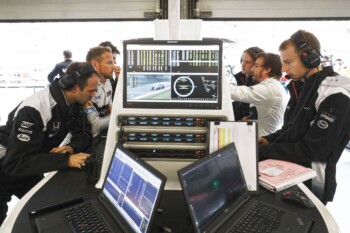
The changes made to a car over the course of a race weekend are all aimed at finding the best possible performance. But that doesn’t mean the last configuration used was necessarily the best one. Keeping a record of every change helps the team understand what improved performance, what didn’t work, and under which conditions the best balance was found.
In motorsport, every setup change is part of a process. A stiffer anti-roll bar, a damper adjustment, or an increase in camber usually responds to a specific problem the team is trying to solve. But when the weekend is over and it’s time to save the information, it’s easy for the final setup to become the default reference for the next race.
The problem is that the latest setup wasn’t necessarily the best one. It may simply have been the last step in a development process that continued after a more effective configuration had already been found. If the team returns to the same circuit and looks only at that final setup sheet, it risks starting from a reference that didn’t produce the best results — and may even have made the car worse.
The latest setup tells you where you finished, not necessarily what worked best
Imagine a Friday practice session with four runs. The car goes out with a known baseline, and the driver is reasonably happy with it, although they report some mid-corner understeer. Before the second run, the team makes an adjustment to the front anti-roll bar and the balance improves.
For the third run, other variables are changed and the car sets its best time of the day, backed up by positive driver feedback. That configuration becomes an important reference, although other factors — such as tire condition and track conditions — still need to be taken into account.
Wanting to make the most of every lap available, the team keeps working and makes further changes in search of better performance on corner entry. The car responds in that area, but loses performance elsewhere and the lap times do not improve.
If only the final setup sheet is kept at the end of the day, that configuration may look like the natural starting point when the team returns months later. But a better-balanced reference had actually appeared earlier.
That is why saving setups should mean more than keeping a final snapshot. What really matters is preserving the sequence that explains how the car evolved and under which conditions it responded in a certain way.
The history of each change helps explain what produced each result
When every configuration is linked to the run in which it was used, the team can reconstruct the entire development process. It knows not only how the car was configured, but also what changed from the previous run and what happened afterward.
That context makes it possible to answer far more useful questions than simply asking what the latest setup was. Which change improved the balance? Which one produced a negative response? When did the best lap appear? With which configuration was the driver able to repeat lap times more consistently?

That is an important distinction between storing information and building technical knowledge.
A single setup sheet shows values. A sequence of setup sheets linked to each run helps the team understand the relationship between changes and results. And the clearer that relationship becomes, the more useful that history will be as a reference in the future.
A faster lap doesn’t automatically mean a better setup
There is another challenge: even if a particular configuration produced the fastest lap of the day, that alone doesn’t prove the setup was responsible for the improvement.
A lot can change from one run to the next. The car may go out on fresher tires, with less fuel, or in better track conditions. Temperatures may have changed, the driver may have found a better reference point, or they may simply have put together a cleaner lap.
Suppose the lap time improves by three tenths after a setup change. The immediate conclusion might be that the change worked. But if that run was completed on a fresh set of tires and a significantly improved track, part of that gain may have had little to do with the setup itself.
That is why setup analysis requires more than comparing numbers between two setup sheets. You need to understand what was happening around each configuration.
The setup is one part of a much broader context that includes tires, fuel, track conditions, lap times, and driver behavior. The more of that information the team can connect, the lower the risk of attributing an improvement to the wrong variable.
The driver also helps explain what happened
If lap time is the only thing we look at, we can end up treating a configuration as successful even though it makes the car extremely difficult to drive. Over the course of a race weekend, that can have negative consequences. If the driver combines one quick lap with complaints about the car’s behavior through corners, instability under braking, or a drop in pace as the laps build up, then that setup needs to be viewed differently.
The opposite can also happen. A slightly slower configuration may allow the driver to repeat lap times much more consistently and manage the tires more effectively.

That raises a question that doesn’t always have a single answer: what was actually the best setup? The answer depends on the objective ahead.
One configuration may be highly effective in qualifying but difficult to sustain over a race distance. Another may give away a few hundredths over a single lap while delivering a much more stable car throughout an entire stint or race.
That is why a setup viewed in isolation is far less valuable than one analyzed alongside lap times and driver feedback. The configuration used for each run stops being a collection of separate values and becomes part of a technical story.
Returning to a circuit should mean continuing, not starting over
This history becomes especially valuable when the team returns months later — or even the following season — to a familiar circuit.
Simply pulling up “the latest setup” may be quick, but it isn’t necessarily useful. What matters is being able to review how the car evolved during the previous visit: where it started, which changes were made, how the car responded to each one, and where the best balance between performance and drivability was found.
RaceData allows teams to keep the setup sheets used for every event, session, and run, preserving that sequence alongside the rest of the race weekend context. This means the team can review not only the final configuration, but also how it got there and what happened at each step along the way.
The idea is not for the system to decide which setup is correct. That remains a technical decision for the team. The goal is to give the engineer access to the history needed to better understand what has already happened, even if the people working on the car are no longer the same, and use that knowledge as a reference for what comes next.
Because sometimes the answer a team needs isn’t in a new test. It’s in a lap completed months ago that still has something to tell us.