 Skip to main content



Blog

Live timing
and management software for racing teams: what to consider before choosing a platform
Discover what live timing and team management software can
bring to a racing team, how it can
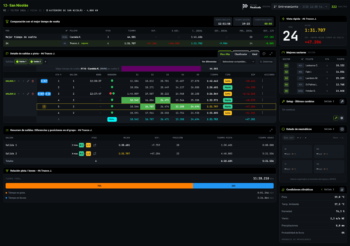
Discover what live timing and team management software can bring to a racing team, how it can support the work throughout a race weekend, and what to consider before choosing one platform over another.
Live timing software for racing teams makes it possible to follow what is happening on track in real time: lap times, sectors, positions, and gaps. But for a race team, its value can go far beyond simply watching a leaderboard while the session is underway.
Seeing the times while the car is on track is essential. But once the run is over and the car comes back into the pits, that information on its own loses part of its value. It needs to be connected with tire records, setup variables, driver feedback, onboard footage, and the data acquisition files generated during the session.
That is where a live timing platform designed around the team’s workflow can offer much more than a real-time leaderboard. By connecting timing with the team’s technical history, engineering decisions, pending tasks, and the information generated during each run, the stopwatch stops being an isolated data point and becomes part of a much broader context.
Why bring in a tool like this? The reason is simple: to have the information you need available when it is time to make a decision. While the car is on track, timing helps identify where an improvement appears, where time is gained or lost, and how performance is evolving against a reference. Once the car is back in the pits, those same records become the starting point for understanding why it happened and deciding what to do before the next run. Having all that information in one place can make a real difference when it is time to act.
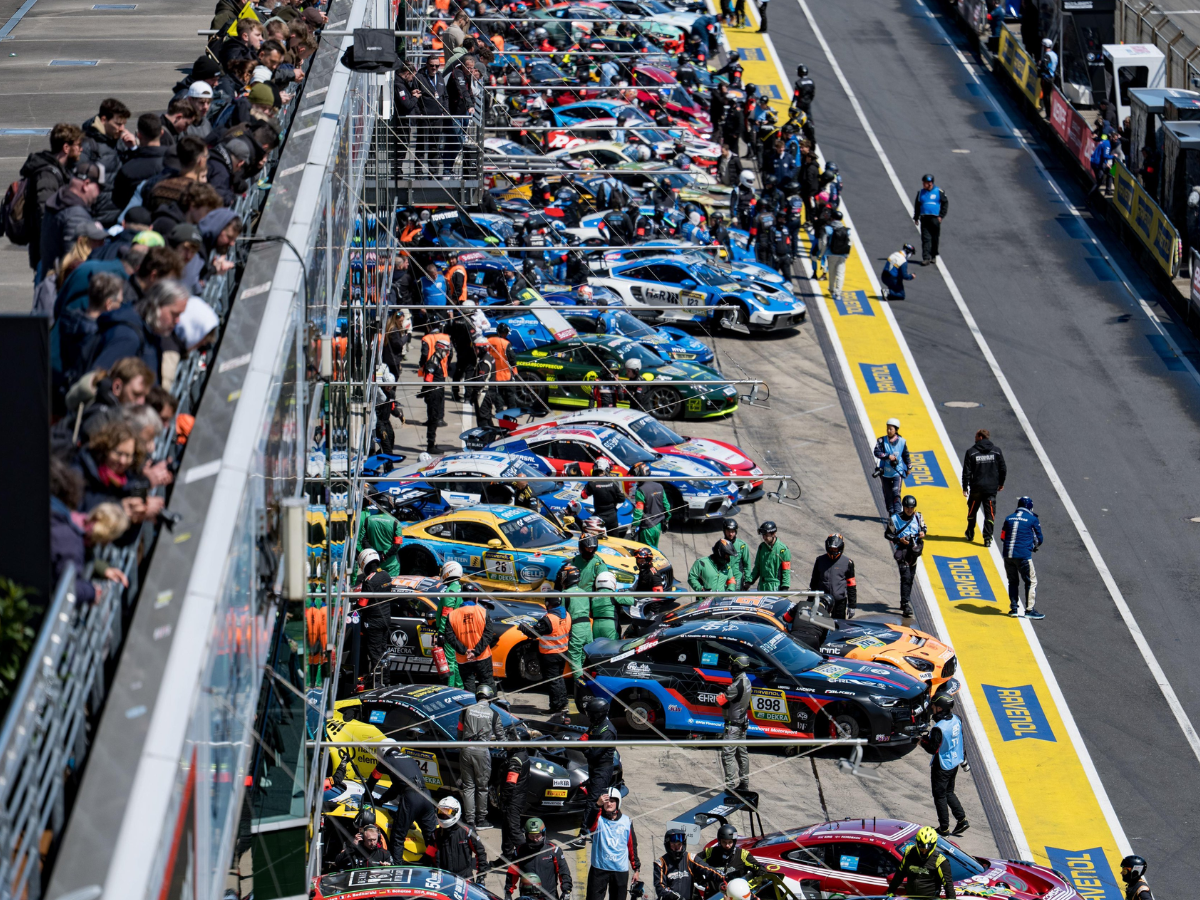
That is why choosing live timing software should not come down only to how quickly it updates the times. What also matters is what the team can do with that data, who can access it, and how it connects with the rest of the technical and operational information generated throughout a race weekend.
Why buy a dedicated tool for the team?
Many racing series already provide their own public live timing system. That may be enough to follow positions or check results. The need changes when the team wants to use timing as part of its own workflow.
An engineer does not necessarily need to see the same information as a spectator. They may need to compare laps, follow sectors, identify specific references, or preserve information to review later. That is where an important distinction appears between seeing the results and working with them.
With a dedicated platform that also brings together the rest of the information generated during each run in a clear, accessible, and useful way for every role, the team gains an advantage when it comes to understanding what happened on track and deciding what to change for the next session.
If the only goal is to access live timing, adding another tool on top of the one provided by the championship may not make much sense. But when those times stop being static numbers on a garage screen and start connecting, within the same system, with the other variables that define each session, the picture changes completely.
From live timing to a decision in the pits
Lap time is only the starting point. It tells us whether a lap was faster or slower, but it does not explain why. The next step is to understand where the tenths shown on the stopwatch were gained or lost.
A first step is to break the lap down into sectors, compare it with other laps, and look at how consistent the performance was. Sectors begin to show where the time was, but there is still context missing.
The improvement may have appeared after a setup change, with a different set of tires, less fuel, better track conditions, or simply a different level of driver execution. The easier it is to connect the timing with what was happening at that moment, the more useful the information becomes.
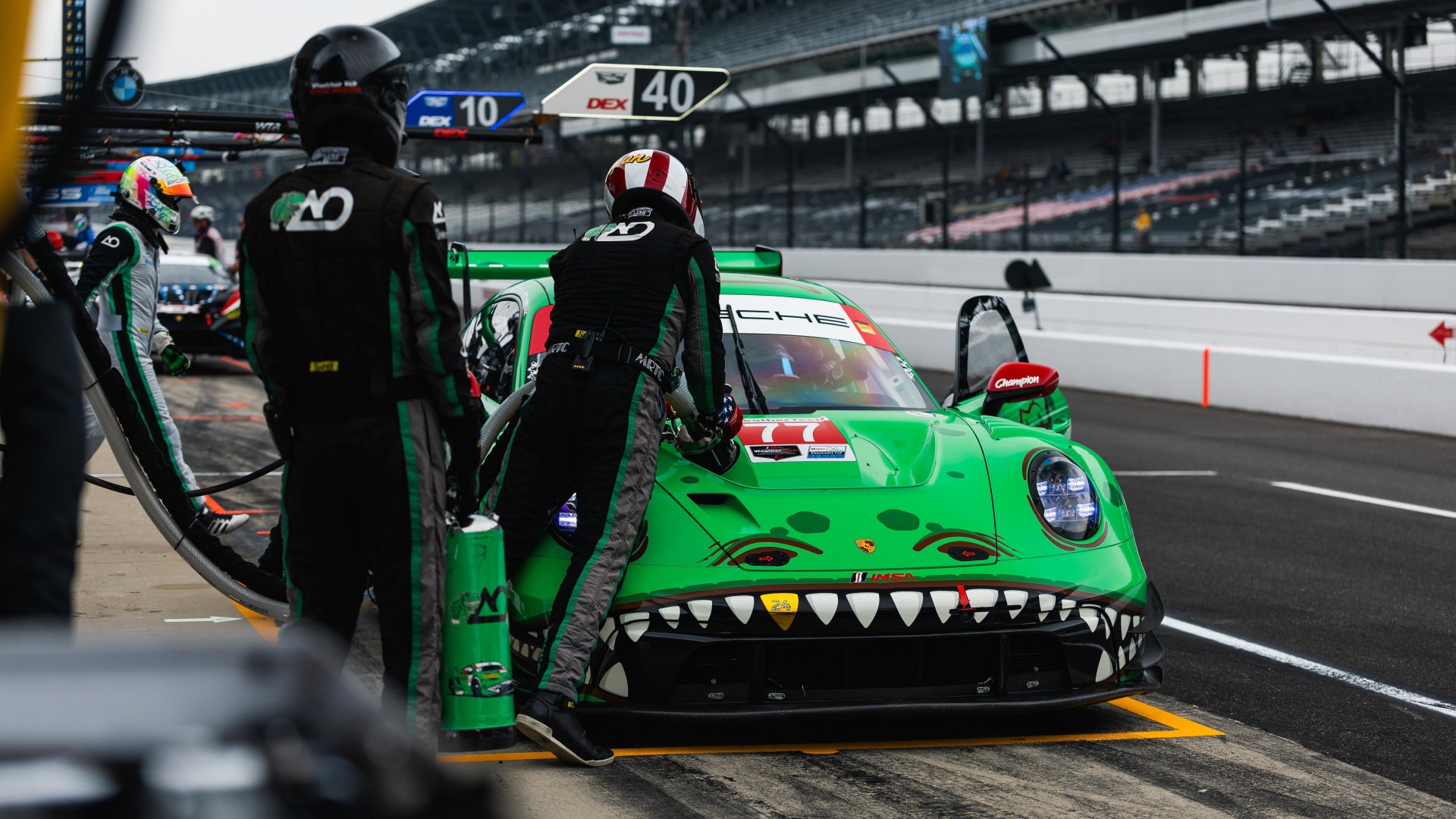
When the car comes back into the pits, time is critical. The team has only a few minutes to understand what happened, decide what to work on, and set the necessary tasks in motion before the next run. That is why the analysis has to go beyond lap times and sectors. Timing is the entry point, but then other questions appear:
- What setup was on the car?
- Which tires did it run?
- What pressures were used?
- What did the driver feel?
- What do the data acquisition files show?
- Is there onboard footage available to review that lap?
And those are only some of the variables that may become more or less important depending on what happened during the run. In those few minutes, having all the information connected and available in one place simplifies the work and helps the team move more quickly toward a decision.
There is no longer a need to reconstruct what happened across spreadsheets, folders, applications, messages, or external devices. With a motorsport management and analysis platform, the team can work from the same information base and use it to organize the next steps and assign responsibilities more clearly. Texto pegado
What should a team evaluate before buying?
Not every live timing solution is built around the same needs. Before choosing one, it is worth thinking about the situations that arise during a race weekend and how the platform fits the team’s actual workflow.
- Speed and clarity: Times need to update quickly enough to follow the session live. But speed without clarity adds little value. Getting the information quickly matters just as much as finding it easily: laps, sectors, positions, and references without navigating through dozens of screens.
- Comparison tools: Showing the latest lap time is not enough. The platform should make it easy to compare previous laps, specific sectors, and references from earlier visits to the same circuit in order to understand where an improvement appeared and what helped build it.
- Role-based access: An engineer, a driver, and someone coordinating operations do not necessarily need the same information. The platform should allow everyone to work from the same information base while giving each role clear access to what matters at that moment.
- History: Information should not lose its value when the session ends. Lap times can become references for comparing another run, reviewing a setup decision, revisiting a previous event, or preparing for the team’s next visit to the same circuit. Keeping that history organized is therefore part of the decision.
- Integration: Timing alone is not enough. If understanding a lap still requires opening a spreadsheet or searching through files to find where a change was recorded, the information flow remains fragmented. A platform that brings together setup, tires, fuel, track conditions, and driver feedback adds value by connecting those records with the rest of the team’s technical and operational information. Texto pegado
The cost is more than the subscription
Subscription price may be the first thing a team looks at when choosing a platform or comparing different options. And that makes sense. But it is also important to consider the operational cost that a tool like this can help reduce.
Searching for files, confirming the latest setup, trying to remember the driver’s feedback, reconstructing which tires were used, or locating the corresponding onboard footage are all tasks that consume time and create friction when information is spread across different places.
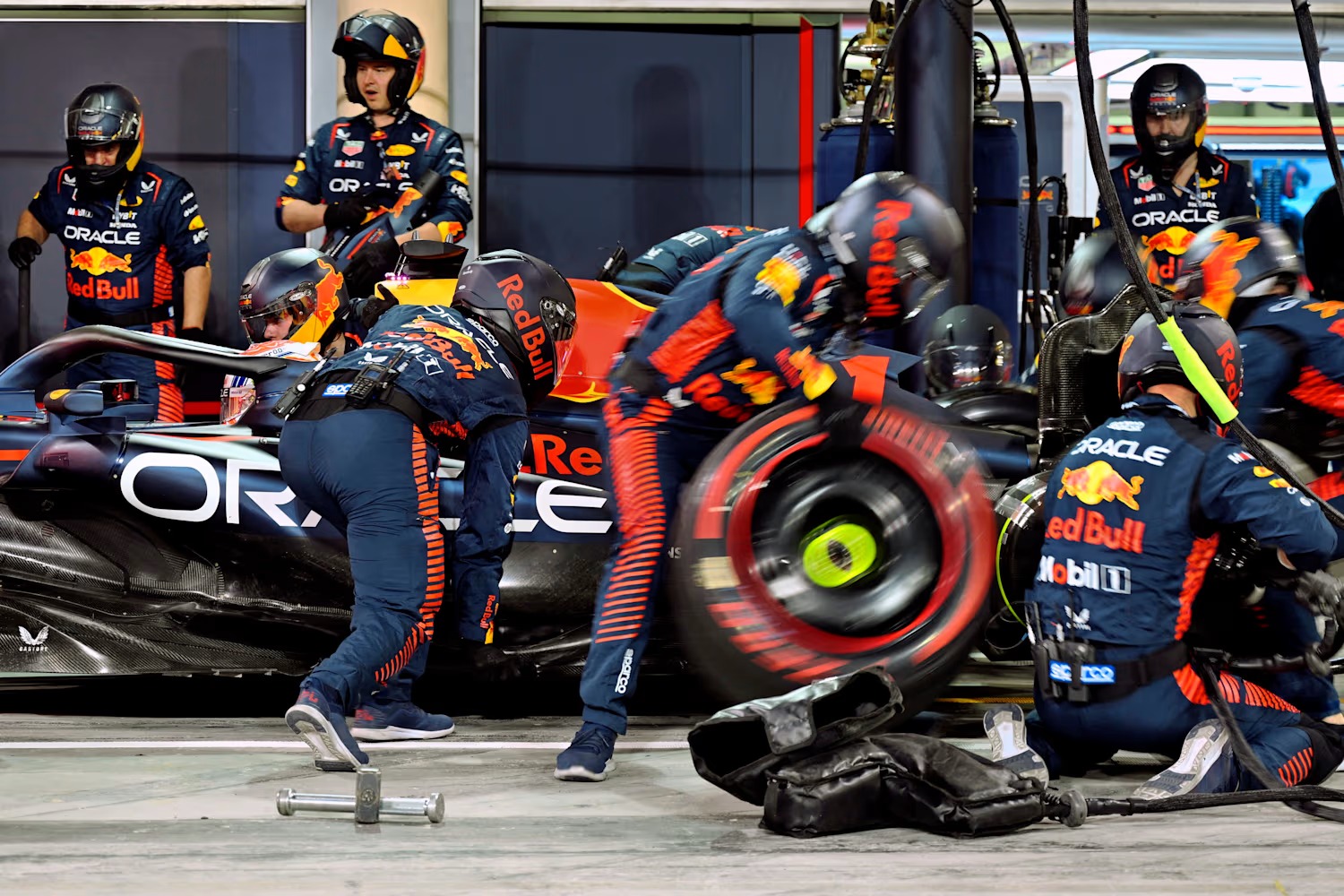
Working in a fragmented way can work perfectly well, but it also requires every team member to know what needs to be done and where to find the information required to do it — something that does not always happen with the necessary coordination during a race weekend.
An integrated system helps organize the workflow from the start, regardless of the size of the team or the amount of data it generates. That is why the cost of a platform should not be measured only against the price of another subscription. It is also worth considering the time it can save, the structure it brings to day-to-day work, and the ability to keep technical information connected and available when it is needed.
RaceData: data and context in one place
Timing becomes more valuable when it can be analyzed alongside the rest of the information generated by the team. That is the idea behind RaceData.
The platform brings together Timing and Live Scoring with Setup, Tire Management, Fuel Management, Driver Feedback, Video Data, Analytics, Tasks, and Files. It also allows teams to store and organize data acquisition files within the context of each session and each run.
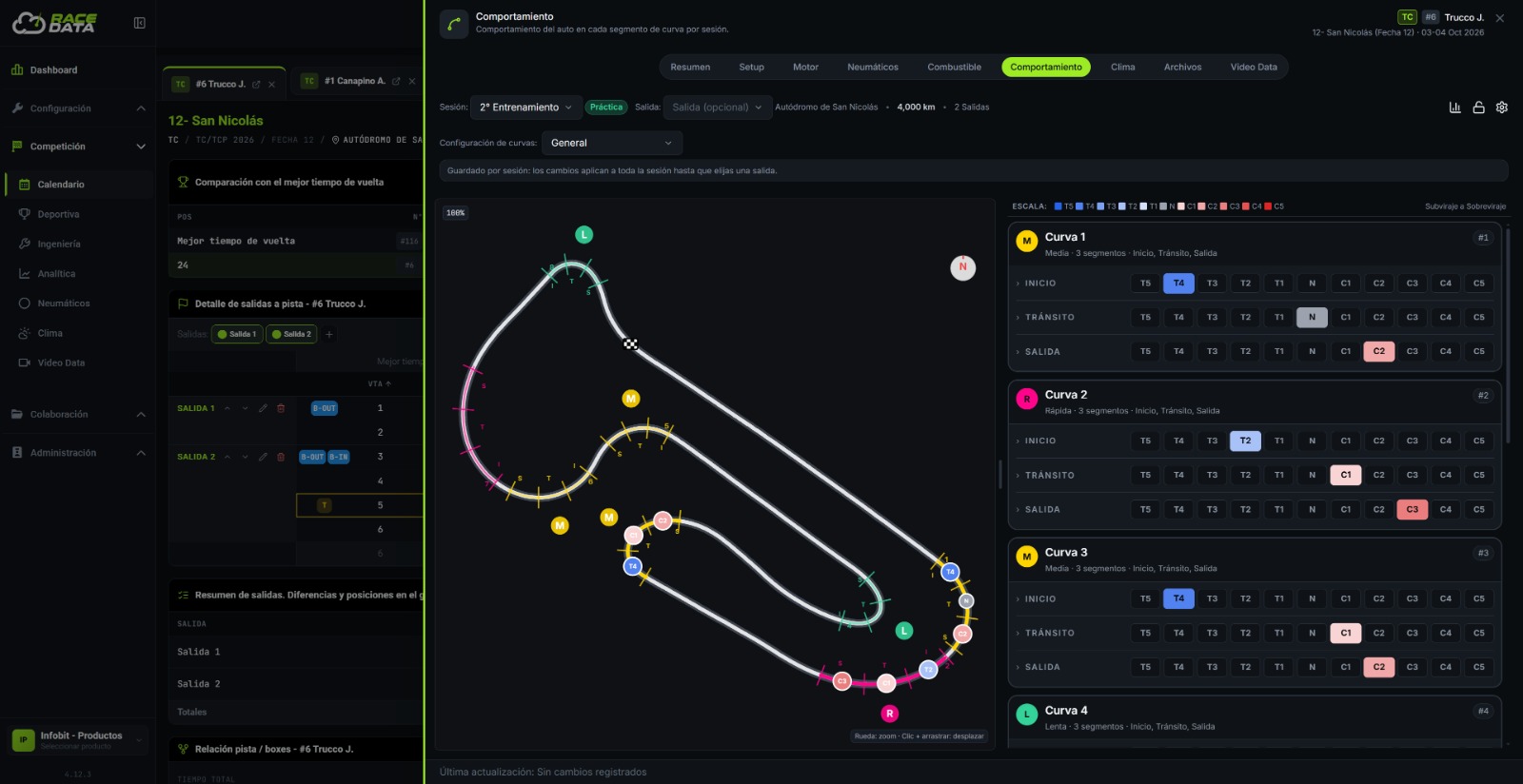
The goal is not to replace the engineer’s judgment or the specialist tools the team already uses. It is to help the team move beyond the lap time itself and answer more important questions: How was it achieved? Under what conditions? What had changed? And what should happen next?
Live timing tells us what is happening on track. RaceData is designed to make sure that information continues to be valuable once the car comes back into the pits and it is time to analyze what happened, organize the work, and make the decisions that come next.
When does it make sense to bring RaceData into your team?
RaceData can be valuable both for a team that wants to organize its workflow properly from the beginning and for one that already generates a significant amount of information and needs to keep it connected.
It can make particular sense when:
- Lap times, setups, tire information, onboard footage, and data acquisition files are spread across different tools.
- Several team members need to access information from the same session.
- Reconstructing what happened during a run takes longer than it should — and those are valuable minutes the team needs before the car goes back out.
- The team wants to build a technical history that can be reused at future events.
- The goal is to connect live timing with analysis and day-to-day management without replacing the specialist tools already used by the team.
It is not about adding another piece of software. It is about reducing the number of places the team needs to search in order to understand what happened and decide what to do next.
Discover how RaceData can fit into your team’s workflow and request your Exclusive Demo at racedata.app.