 Skip to main content


Blog

Onboard video
and data acquisition files: how to turn a recorded lap into useful analysis
Recording the lap is not enough. The real value
comes when the video can be identified, organized,
Recording the lap is not enough. The real value comes when the video can be identified, organized, and connected with the information from each session.
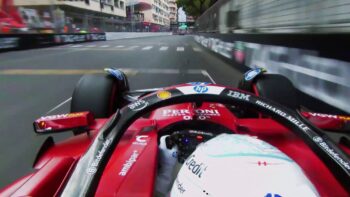
Onboard cameras stopped being a novelty a long time ago and have become a standard tool for racing teams. Without them, it is difficult to get clear references for braking points on corner entry, the line taken through a turn, or a driver’s technique. But recording the video is not enough; it is only the first part of the process. The real challenge begins afterwards.
Once a run is over, the review process begins: collecting the cameras, removing the memory cards, downloading the footage, identifying the relevant lap, trimming unnecessary material, and linking the video with other information from the session. It is a time-consuming process — and time is rarely something a team has to spare during a race weekend. Even after all that work, there is no guarantee the footage will be easy to find when it is needed again.
A matter of file size
By the time the driver is settled in the car and the team has finished its final preparations, the onboard cameras usually need to be recording already. There may still be several minutes before the car actually goes out on track. The same thing happens at the end of a session: recording can continue until the car returns to the garage and someone can stop the camera. Only part of that footage is actually useful for analysis. Multiply that by multiple drivers, cars, sessions, and days of track activity, and the amount of material grows quickly — and all that footage takes up space.
That affects the entire workflow afterwards. Downloading files takes time, copying them from a memory card to another location takes time, uploading them to a server or platform takes time, and sharing them with other team members does too. As a result, many teams end up with a practical but poorly structured solution: files stored on external drives, laptops, memory cards, or inside folders named in a hurry. During the same weekend, everyone may know what each file contains. Three months later, finding the right video may mean searching through folders, opening files, and trying to reconstruct from memory what happened in each session. Or the right memory card may be missing, an external drive may not be available, or the person who stored everything may not be there. The footage still exists, but if you cannot identify and retrieve it quickly, much of its value is lost.
Why metadata matters as much as the video itself
A video file contains more than just images. Depending on the camera and its configuration, it may include metadata associated with the recording, such as timestamps and GPS information. These references can help determine exactly when and where a particular segment was recorded. In motorsport, that context can be extremely valuable.
If the video and the data acquisition files share time or position references, the two can be synchronized much more efficiently. The onboard video stops being just a visual sequence and can be linked to what happened on track during that same lap. That is one of the main advantages of Video Data: being able to observe what the driver did while also examining what happened during the lap — where they braked, when they got back on throttle, which line they used, how they corrected the car, which reference points they chose, and what happened through a particular sector.
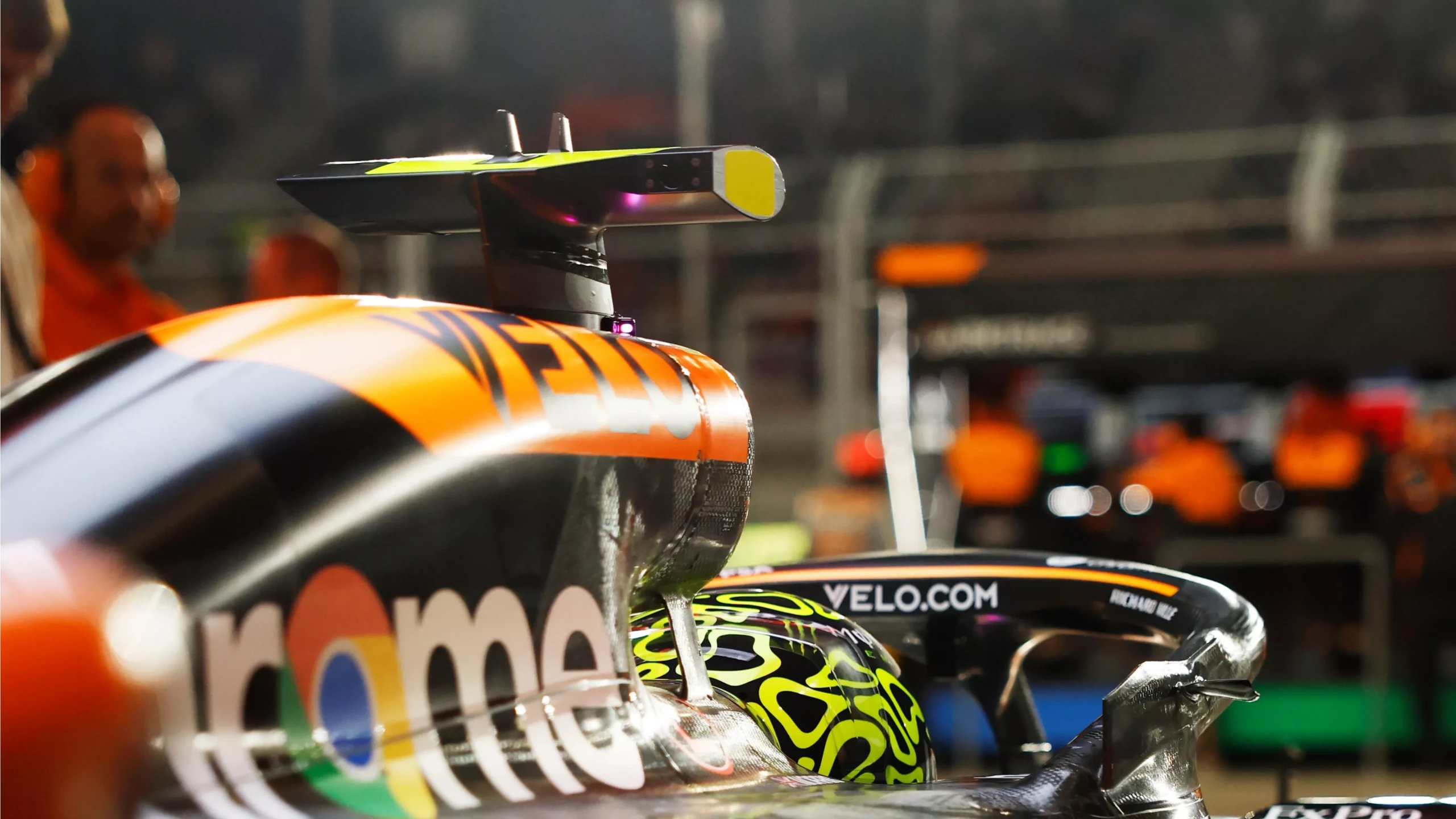
But before reaching that point, the video and the acquisition data first need to be aligned in time. The GPS inside an onboard camera does not always operate under ideal conditions. Its performance can be affected by where the camera is mounted, the structure of the vehicle, and how well the unit can receive a signal. A camera positioned too far back inside the car, or in an area with limited visibility of the sky, may struggle to record position data with the same accuracy.
When those references are unavailable, or when relevant metadata is lost during processing, synchronization can become a manual task. That leads to a process familiar to anyone who has worked with onboard footage: finding a reference point, identifying pit exit, comparing the beginning of a lap, shifting the video a few seconds, watching again, and adjusting repeatedly until both records line up. It can be done. The real issue is the amount of time it consumes when the process has to be repeated again and again.
Onboard footage becomes more valuable when it is connected to what happened on track
Video is useful on its own. But when it is combined with timing data, it takes on a different level of relevance. If a driver loses several tenths in a particular sector, the onboard footage can help reveal what changed in the driver’s behavior and may explain that delta.
Watching an onboard lap can be useful, but analyzing it within the context of a session is much more powerful. Imagine a driver loses three tenths compared with their best time in a particular sector. The timing tells us where the difference appeared. The video can provide another layer of interpretation: perhaps the driver braked a few meters earlier, changed the entry line, had to make a correction, couldn’t use the full width of the track on exit, or the car started behaving differently.
Onboard footage lets us observe things a number alone cannot show: whether the driver extended the braking zone, whether the car’s behavior changed, or whether there was a difference in the entry or exit line through a corner. But to make that comparison efficiently, we need to know exactly which video corresponds to that lap. This brings us back to a concept that applies to much of a race engineer’s work: isolated data is less valuable than contextualized data. A video without a reference is simply a video. An onboard linked to its driver, event, session, run, and corresponding data becomes useful information for analysis.
The challenge does not end when the race weekend is over. A team can accumulate hundreds of onboard files during a season, and that material may remain useful long after it was recorded. Before returning to a circuit, a driver may want to review laps from the previous year. An engineer may need to compare how a corner was approached with different car configurations. A new driver may use previous onboard footage as a reference when learning a track.
But for that to happen, the file has to be easy to find. Simply storing it is not enough. You need to know what it is, who it belongs to, which event it came from, which session it was recorded in, which run it corresponds to, and, ideally, how to reach the relevant part quickly. That is why storing video and managing video are two different things.
Engineers, mechanics, technicians — and video editors too
We do not always need to keep or share the complete recording for a specific analysis. Often, the useful part is a single lap, a group of laps, or a particular section of a session. That introduces another common task: trimming the footage. Once again, however, this process is often carried out outside the environment where the rest of the team’s information is stored.
The file is downloaded, opened in another application, the relevant section is located, the footage is trimmed, exported, compressed, and finally uploaded or shared. Individually, these small tasks may seem insignificant. The problem is repetition. Five minutes here. Ten minutes there. Another file to export. Another one to locate. Another folder. Another application.

During a race weekend, when the time between one run and the next can be extremely limited, reducing this friction is also part of improving team operations. There is another important detail: processing a video should not necessarily mean losing the information that allows it to be connected with the rest of the session. If useful references from the original file disappear during trimming or conversion, the result may be a lighter or shorter video — but also one that is more difficult to synchronize afterwards.
That is why preserving relevant metadata throughout the processing workflow can be extremely valuable. It is not just about creating a video file that looks right. It is about keeping that file connected to its origin. RaceData provides a solution to these challenges through its own editing tool.
Onboard video management in RaceData is not simply designed as a place to upload files. It is part of the same system in which the team organizes information about events, drivers, and sessions.
RaceData allows teams to work with onboard footage before storing it permanently: trimming the video, compressing it, and uploading it directly to the system, reducing intermediate steps in the usual workflow. The goal is for the team to spend less time preparing files and more time using them.
In addition, the relevant metadata required for later synchronization with data acquisition files is preserved during processing. That changes the logic of the workflow. Instead of having video on one side and session information on the other, both can become part of the same context.
When onboard footage and data acquisition can be connected properly, the value of both increases. The Video Data module allows teams to link camera footage with information from each lap to compare driving, sectors, speed, and references from every run. In this way, onboard video and acquisition data stop being two independent files that someone has to synchronize manually and become part of the same view of performance, helping the team understand where time is being gained, where it is being lost, and what is actually happening on track.
Reconstructing race weekends can make a difference
An onboard recorded today may become a valuable reference six months from now — or the next time the team returns to the same circuit. Preparing for the weekend by reviewing what worked in previous laps, or identifying what needs to be corrected to improve performance, can become a decisive factor when race day arrives. But that requires having the material available. Every video that is correctly identified and linked to its driver, session, and event contributes to building the team’s technical archive. Just like a setup, a tire record, or driver feedback, its real value increases when it can be retrieved and placed back into context.
The next time the team returns to that circuit, it should not have to begin by searching external drives to find out which camera contained that lap. It should be able to retrieve it as part of the history of that race weekend. This is one of the core ideas behind RaceData: the information generated by a team should not end up scattered across different locations and formats; it should become part of a single ecosystem.
Onboard cameras have made it increasingly easy to record what happens inside a race car. But they have also created a new challenge: how to manage all that footage without letting it become another source of disorder.
The challenge is not simply recording a lap. It is being able to identify it, find it, trim it, process it, connect it with data acquisition, and preserve it as part of the team’s technical history. A file that nobody can find is unlikely to help improve a lap. In RaceData, that entire process is connected — from the moment the file leaves the camera to the point where the video is compared with the information recorded on track. The onboard shows what happened, while the data helps measure it. When both are brought together, the team gains a clearer understanding of the lap and a better chance of finding where the next improvement lies.